[email protected]
+91 97269 26402




Zinc Sulphate Fertilizer Application Methods: Soil, Foliar, and Seed Treatment
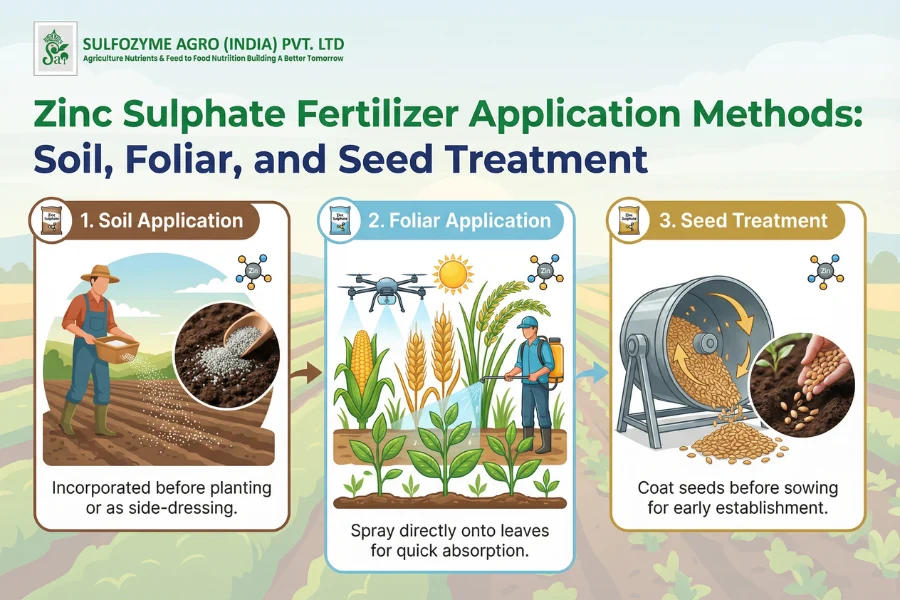
Zinc Sulphate Fertilizer Application Methods: Soil, Foliar, and Seed Treatment
Hey there, fellow grower-struggling with stunted crops or yellowing leaves? You’re not alone, and zinc sulphate fertilizer is here to help turn things around with confidence. As a trusted nutrient boost, zinc sulphate fertilizer delivers essential zinc and sulfur to combat deficiencies effectively.
Why Zinc Sulphate Fertilizer Matters
Zinc sulphate fertilizer is a powerhouse micronutrient that supports enzyme functions, growth hormones, and stress resistance in plants. It shines in alkaline or sandy soils where zinc locks up, ensuring robust yields and healthier produce.
Farmers love zinc sulphate granules for their slow-release benefits, providing steady nutrition over time. Whether you’re tackling khaira disease in rice or boosting fruit set in orchards, this fertilizer reassures with proven results.
Imagine your fields thriving-zinc sulphate fertilizer makes that possible by enhancing nutrient uptake like phosphorus and building drought tolerance.
Soil Application Method
Soil application of zinc sulphate fertilizer is your go-to for long-term zinc supply, ideal for cereals like wheat, rice, and maize. Broadcast zinc sulphate granules at 5-15 kg per acre, depending on deficiency levels-mix into the top 6-8 inches of soil and irrigate well.
For best results, apply 1-2 weeks pre-planting or band near seeds for cereals; rates like 10-25 kg/ha work wonders. This method ensures roots access zinc steadily, outperforming foliar in yield boosts for sunflowers by up to 27%.
Don’t worry if tests show low zinc-zinc sulphate granules integrate seamlessly with compost for organic-friendly correction.
Foliar Spray Method
Need quick fixes? Foliar spraying zinc sulphate fertilizer delivers zinc straight to leaves, perfect for veggies, grapes, and citrus. Mix 0.5-1 kg in 100 liters of water per acre (or 5g per liter for gardens), spraying both leaf sides early morning.
Apply 2-3 times, 10-14 days apart, at vegetative or flowering stages-combine with urea for better stick. It’s temporary but rapid, complementing soil apps for fruits and showing superior quality in wheat grain Zn.
Rest easy: Avoid windy days, and watch deficiencies fade fast with this supportive approach.
Seed Treatment Method
Kickstart seedlings right with seed treatment using zinc sulphate fertilizer-great for rice, wheat, and green gram. Mix 2-3g per kg seeds into a slurry, soak 10-15 minutes, then dry before sowing.
This boosts early vigor and yield; studies on mungbean used 2-8g/kg with RDF for optimal growth. Zinc sulphate granules can be powdered for even coating, ensuring uniform uptake from day one.
You’re setting your crop up for success-simple, effective, and reassuring for busy seasons.
Dosages and Timing Guide
For soil application, use 5-15 kg per acre (or 10-25 kg/ha), applied pre-planting or during early growth stages for crops like wheat, rice, maize, and fruit trees. Foliar sprays call for 0.5-1 kg in 100 litters of water per acre, best 2-4 weeks post-planting or at flowering for grapes, citrus, and vegetables.
Seed treatment requires 2-3g per kg of seeds, done 2-3 hours before sowing for cereals like rice and wheat. Soil drench works at 2-5g per litter of water, using 1-2 litters per plant during the vegetative stage for perennials and young plants.
Always tailor dosages via soil tests-minor issues need less, severe ones more-and limit soil apps to once per season while repeating foliar as needed.
Benefits Tailored to Your Crops
Zinc sulphate fertilizer amps immunity, yield, and quality-think higher grain fill in cereals or better fruit set. In sunflowers, soil + foliar combos hit 1768 kg/ha seed yield.
Zinc sulphate granules suit sustainable farming, fighting deficiencies in high-pH Indian soils like Gujarat’s. Users report explosive growth and stress tolerance, making harvests reliable.
Best Practices and Precautions
Test soil first-aim for pH-aware apps. Store zinc sulphate granules dry; wear PPE during mixing. Pair with sulfur needs, as it supplies 15-19% S in monohydrate forms.
Overdo? Rare phytotoxicity-stick to rates. Organic? Yes, with manure blends. Consult locals for region tweaks, like IFFCO’s 33% Zn formula.
Choosing Quality Zinc Sulphate Granules
Opt for high-purity zinc sulphate granules like 33% monohydrate for solubility and efficacy. Bulk options ensure value-water-soluble for all methods.
You’re investing wisely in crop health; trusted brands deliver consistent purity.
Start with a soil test, pick your method-soil for longevity, foliar for speed, seed for starts. Track progress; adjust next season. Your fields will thank you with bountiful, nutrient-rich yields.
Zinc sulphate fertilizer empowers confident farming-simple steps, big rewards. Questions? You’ve got this!